
THIS VINTAGE JUNGLE SERIES first appeared in 2002; because it was popular with visitors, I am sharing it again now. The series was written for the 3rd Edition of Warhammer 40,000, but I have made some revisions to the original posts to account for changes to the game, and to broaden its scope to wargames in general.
Editor’s note: Ken Lacy, aka “The Fabulous Orcboy,” has a reputation for not just defeating, but annihilating his opponents. You can read about his experiences at the 2023 NovaCon here. Below, he recounts his experiences playing 40K.
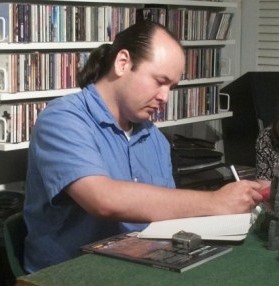
Well, I’ve been playing 40K on-and-off since about 1990, perhaps a bit earlier. My memory gets hazy…. I played Fantasy at least a year earlier. I played mostly Marines through college, starting with the Rogue Trader rules, then the Battle Book addendum and changes, and switched to full-time to Imperial Guard with the release of the 2nd Edition. I’d had enough of Marines by that time.
I never had the money, the ability to readily transport, or the desire to collect lots of tanks, so my Guard were infantry heavy, even in 2nd Edition when vehicles were God. I won at least one tournament in Hawaii while in grad school with my all-infantry Shooty Imperial Guard Army From Hell, and another when I moved to New York City.
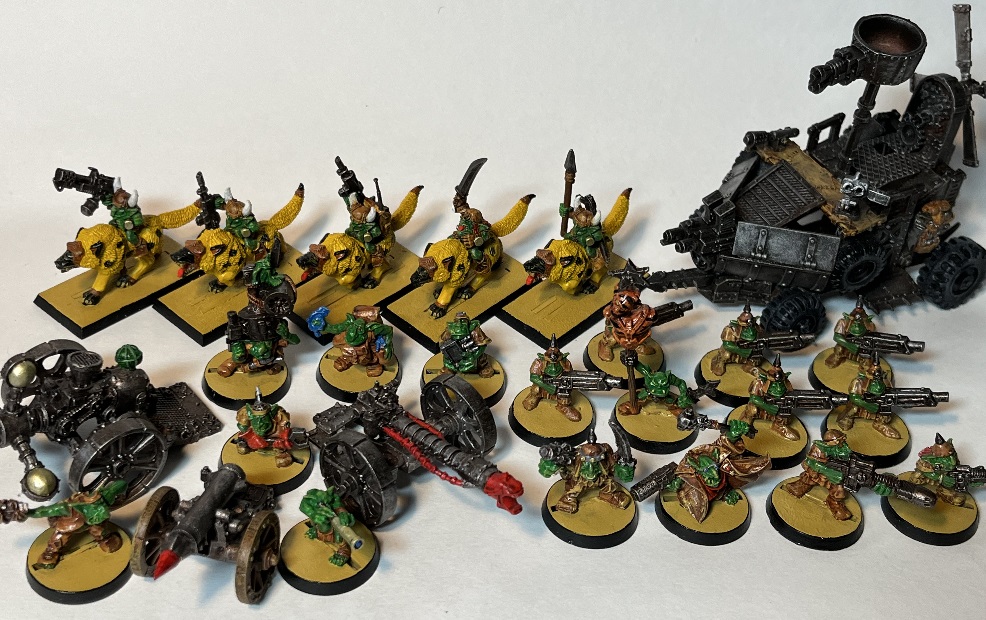
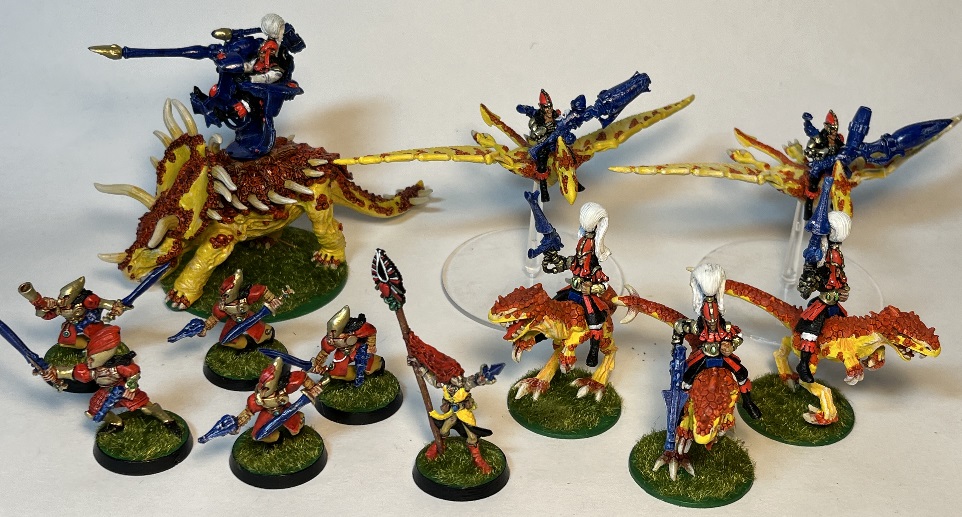
I’ve since tried out Marines again (my Ad-Hoc Crusade) as well as various Eldar armies–I had some minis back in 2nd Edition but rarely used them–but my two most characterful are Farseer Bob and his Marvelous Reapers (Biel-Tan) and my Clan Starfire Exodites (Saim-Hann). I also had the wild and crazy idea for a Rebel Grot army, based around the core of a vastly underutilized Gorkamorka Grot Mob, which had been my driving passion for the past two years or so.
Now I’m working on four armies at once (not recommended!) because of a surfeit of ideas: Swingin’ Sixties Sisters (Sisters of Battle), the Ripper Swarm army (Tyranids), a Slann Expeditionary Force (T’au), and the top-secret Alpha Legion army (Chaos).
I’ve always tended to favor shooty, shooty, shooty armies, partly because of when I got into the game (back in the good old days of Overwatch), but also because most of my opponents back in my college days were crazed Chaos combat-monsters that I had difficulties beating with Marines and no hope of beating with Guard. Not in hand-to-hand combat, anyway.
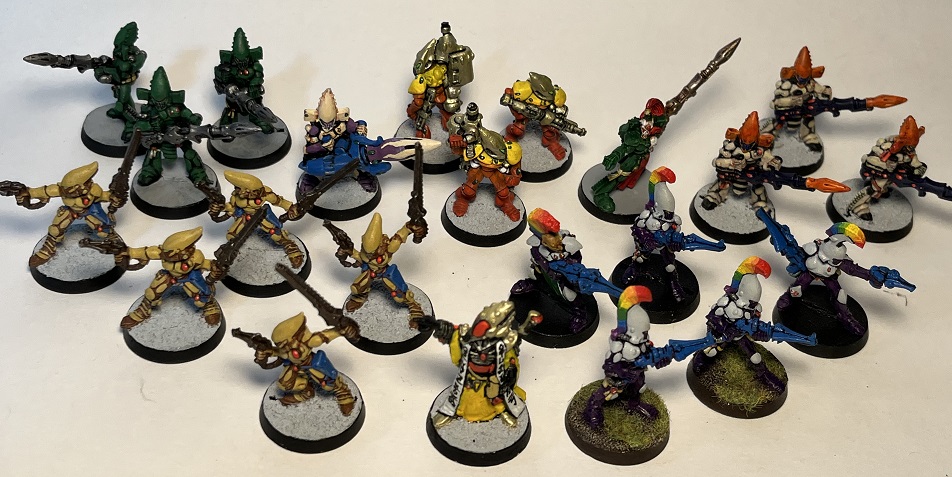
Previously, I placed in the top four or five at Rogue Trader Tournaments fairly regularly, with Exodites and Rebel Grots and even Farseer Bob. I’ve also won two tournaments, one GW store tournament (with Farseer Bob) and one Rogue Trader Tournament (with my Exodites).
I don’t mind winning, but the competition at my local club, what with composition and painting and psychoanalysis of what makes a “great” sportsman, has led me to de-emphasizing winning tournaments, and simply emphasize what I enjoy–winning individual games and having a good time (which tends to involve my opponent also having a good time). It’s a formula that has placed me fairly well in tournaments, and given me a bit of a rep.
Army Selection
by Ken Lacy
Stan has already covered quite a bit, so I will discuss other, less specific elements of army design. From my perspective, these are just as important as making sure that you have all the tactically important elements of a fighting force in your own list–just as important for playing, and winning, wargames. On that rather optimistic note, I begin.
Context is Everything. Nothing exists in a vacuum. Every army list you design should also take into account several important factors, factors that great military thinkers since Sun Tzu have stressed repeatedly.
First, know your opponent. You will always do better when your army is designed to defeat the opponent you play. You will do even better if you design your army to defeat your opponent’s most probable army design.
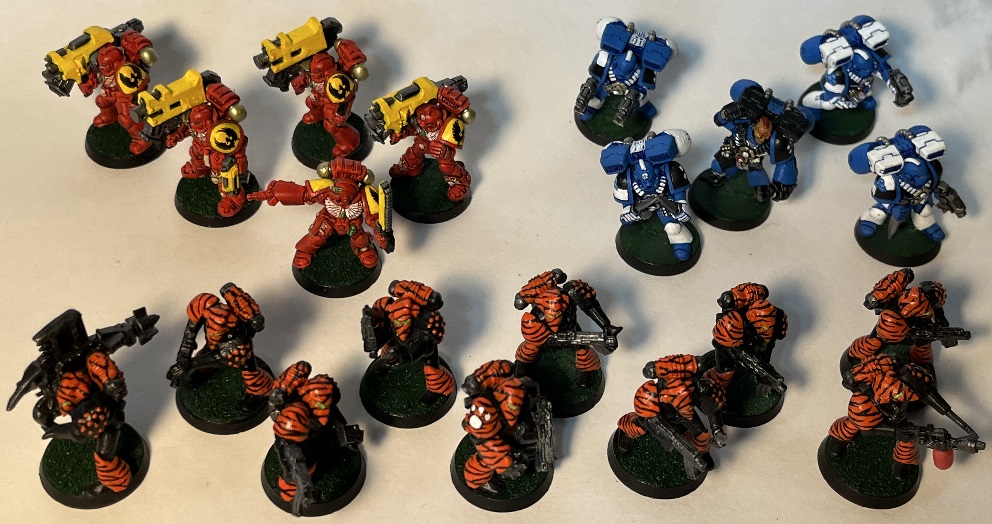
Example: If your opponents always field many units of Marines with close-combat weapons in Rhino transports, you will need a means to counteract his design strengths (mobility, armored protection) with elements in your own list (for example, anti-APC weapons like autocannons (low cost, high strength, high rate of fire), or cheap screening elements (Cultists or Gaunts) for your core forces.
Second, know your environment. You should know better than anyone the sorts of terrain that your regular gaming group favors. Design your armies to take advantage of such terrain.
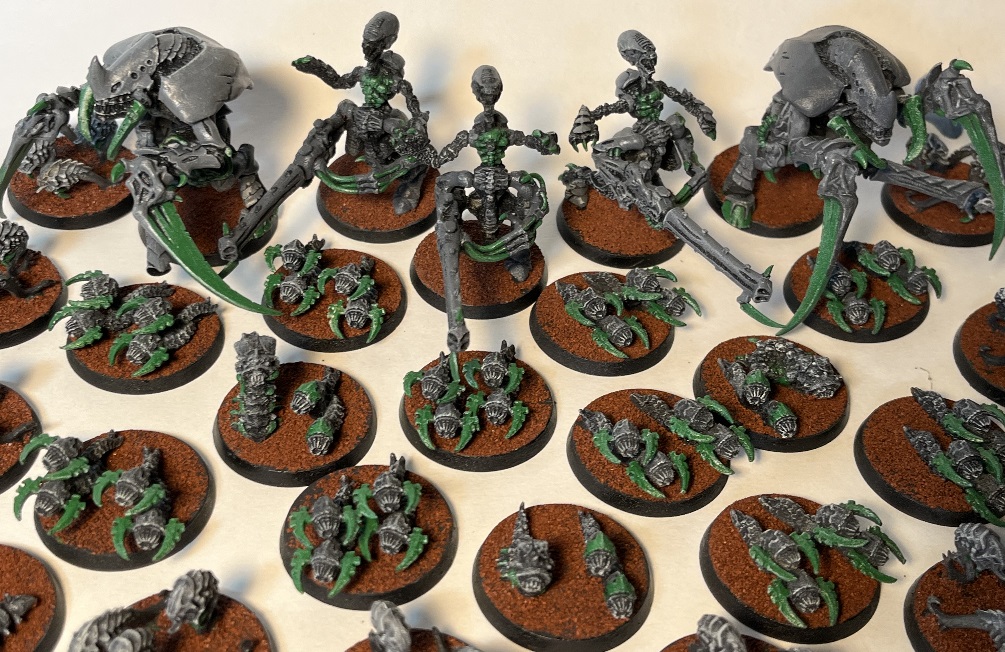
Examples: A “shooty” army design will do much better in open terrain, and comparatively poorer in cluttered terrain. Armies relying heavily on transports will do poorly in very dense terrain, but work best in relatively open terrain with pieces sizable enough to hide vehicles from enemy fire. Some swarm armies (Catachans, Tyranids), on the other hand, have a substantial edge over their opponents in very dense terrain that severely limits line of sight.

Finally, strive for balance! If you design your army to specialize in several very narrow “themes,” it may be quite successful when in its element, but will be very easy to beat outside its element. This will be particularly true if you are playing in an unfamiliar format or against an unfamiliar opponent–but will also be true if your opponent simply brings an army (list) that you weren’t expecting to face. So, make sure your army has at least a few units in it that give it enough versatility to face opponents and situations you weren’t expecting!
Example: Your gaming group usually plays on fairly open tables, and your Space Marines are geared up to kill lots of big Monstrous Creatures with 2+ saving throws–lots of small squads with lascannons and plasma guns backed by Devastators. Your regular Tyranid opponent has some surprises for you, however–he’s just finished building all that wooded terrain he’s been promising to finish for months, and he’s also decided to try out his 120-Hormaguant army. Oops.
Hint: If you’re planning to play at a tournament against unfamiliar opponents, the “safe” course is to build an army with some mobility, a number of AP3 and AP2 weapons (and power weapons), capable of stopping most light (AV 10-12) transports, and designed to operate in sparse to moderate terrain. In other words, if you design your army to do well in fairly open tables against T4 opponents in power armor, you will do all right. Most tournament events don’t feature loads of terrain, and the majority of 40K players field some sort of Marine army or other (which includes Chaos Marines, of course).
The Numbers Game. A wargame like 40K has some unusual side-effects that relate to the fact that it is, ultimately, a game. One thing directly related to army design is the point value system. Ideally it’s a way for two opponents to field vastly different sets and numbers of units and still remain confident that their two forces are roughly equal.
Since this parity is achieved through use of absolute numeric values, this means that part of the Fine Art of Army Design is learning how to squeeze out the maximum benefit for the minimum cost. For those of you who thought that math and economics would never be useful once you graduated from school, you have my deepest sympathies….
The first step is to plan ahead. You should have a specific tactical “theme” for your army: shooty, assault-oriented, fast, etc. Your game plan should directly affect your army design. So make sure that the units you include have the ability to carry out your cunning plans–or else you’re simply wasting points.
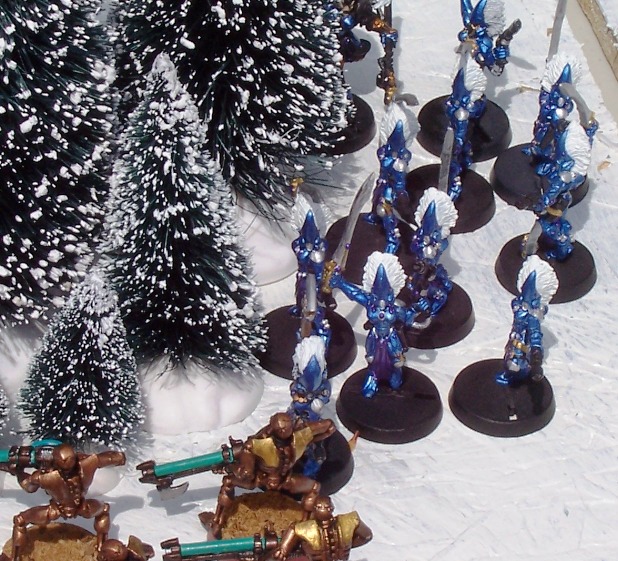
Example: You’re designing an assault-oriented Eldar army that features a unit each of Banshees and Scorpions. It’s a safe bet that you want to give those assault units each a Wave Serpent transport–it will guarantee that they get into the fray much quicker than if they were plodding along, getting shot at by your opponent.
Hint: If you find that you have given a unit or character some item or upgrade that they never use, that’s probably something you can cut from your list–reassign the points to purchase something more useful for your army.
The second step is to get the most for your points. Most army lists charge more for certain options in certain units than in others. Sometimes that extra cost is worth it–but usually there are tactical advantages to taking the cost-effective route. And you save points (for more nastiness in your army) when you do it, too!
Example: Lascannons in Marine Devastator squads cost substantially more than the exact same Lascannons (with the exact same BS, etc.) in regular Tactical Squads. If instead of one Devastator squad with four lascannons, you instead field four Tactical squads with one lascannon each, you gain the following game benefits.
First, you have spread out your heavy weapons, making it harder for your opponent to knock them all out in a single turn. Second, you aren’t paying that much more–because you would have had to field two Troops choices anyway had you included the Devastators, and by bringing four Tactical Squads you have fulfilled that need and saved points on the individual weapons. Finally, you have increased the body count on the table, which brings me to…
The third step is to remember that there is strength in numbers. Generally speaking, the person fielding more models has an advantage over his opponent. No matter how nasty or powerful a single model is, there is a limit to the amount of damage it can do to the enemy. An army that has the numbers to simply absorb that damage and not worry overly about it is truly fearsome.
Example: An Ork Gretchin is a rather pathetic little creature, and it shouldn’t be a huge surprise that it’s worth a few measly points. However, that means that you can field several of those little Gretchin against every Space Marine. Points-wise, they’re equal, but guess who ends up the a slight statistical edge, though? Now try that comparison using an Eldar Avatar. Three Avatars are seriously kick-ass, but when they’re up against the equivalent points value of Gretchin, they suddenly don’t look so nasty.
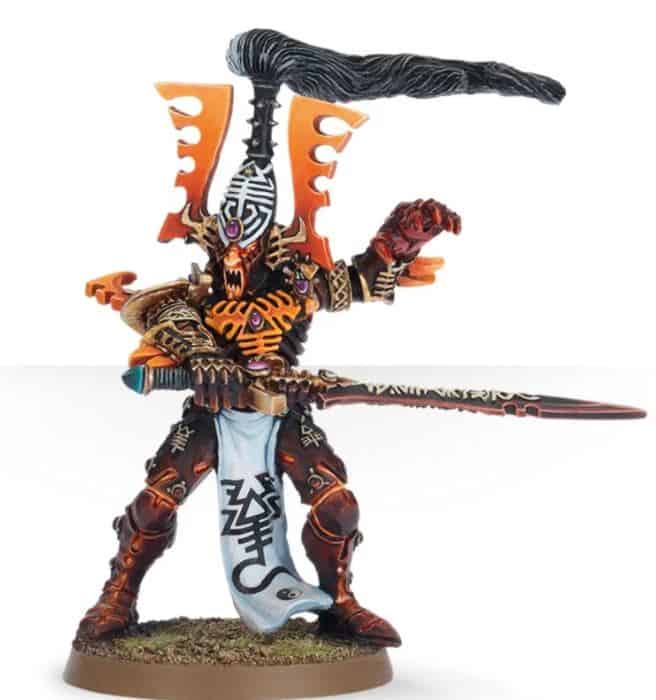
Remember, the house is always stacked in favor of greater numbers. A little bad luck isn’t a problem if you have scores of miniatures in your army. That same bad luck can be crippling if you only have a handful of miniatures.
Play to your Strengths: The Comparison Game. Every army in 40K is different. This is intentional on the part of the games designers. One thing to keep in mind, however, is that this difference leads to different armies having different inherent strengths and weaknesses.
So, design your army around its built-in advantages. This seems like something blatantly obvious, but it’s surprising how many players overlook or ignore this advice. Very simply put, if your army book notes that you get advantages X, Y, and Z, build your army to get the most possible use out of them.
Likewise, this means that it’s harder to play an army list that was constructed despite the built-in drawbacks and disadvantages of the army (such as “assault” Guard or “shooty” Tyranids). This is something I’d really recommend only in three situations:
- You’re a fluff-monkey that absolutely MUST design your army in a certain way, and damn the consequences!
- You’re a masochist that really gets a thrill out of losing every single game you play.
- You’re experimenting with different or unusual lists and/or enjoy the challenge/handicap.
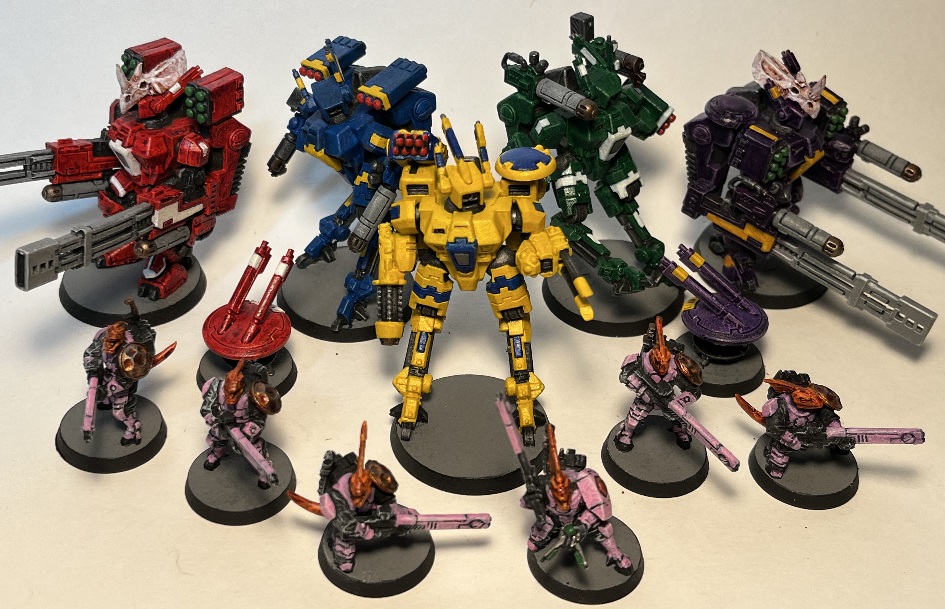
Stick to your Guns. Once you’ve settled upon a general tactical “theme” for your army, taken your likely opposition and tabletop environment into account, gotten the most bang for your points, and made sure to add a few units to cover your other bases, it’s time to go back and make sure you stick to your plan!
There’s nothing worse than being so “versatile” that your army is no longer good at anything, or worse yet, much smaller than it could be. Don’t try to kit out every model with every weapons option, just so you can be prepared for anything. Because every one of those options cost points, that will inevitably result in many expenditures that you end up never using–drastically reducing the size of your army (compared to what you could have fielded) in the process. Similarly, if you look at your army and realize that a good chunk of it (about a third, or more) doesn’t fit the tactical theme of your army, you’re not sticking to your plan!
Example: You realize that the two units of Ogryn in Chimeras that you included in your Imperial Guard army as a “counterassault” element eat a huge amount of points in your 1500 point army list! You’ve just sunk a lot of your points into two units you only intend to use against opponents that get through your (not so withering as a result) firepower. Time to scrap one of those units and use it to get more Big Guns!
The Human Element. Finally, remember that every player has his or her own style of play, and general advice that applies perfectly for everyone is something that you can never entirely capture in any single article. What works for one person might not necessarily work for another person.
While there may be certain things any player can do to streamline and optimize his army, and while certain things will never work, no matter who you are (Chaos Cultists with only hand weapons, for example, will never ever be able to stop a Land Raider), in the final analysis the most important rule of all in army design is to Know Thyself.

This has two important sub-elements. First, you should keep it fun. That means that ultimately you should design army lists that you enjoy using. Some people, for example, never enjoy playing a “shooty” themed army, so will design “assault” lists even for armies that aren’t best designed for that role (Imperial Guard, for example). Others enjoy the look or style of particular units, or particular combinations of units–even if they aren’t very effective or don’t work well with each other. And some players simply value other aspects of the 40K hobby more than winning games. Know what works for you. And stick with it.
Example: You really, really like Space Marine Scout Bikers. They look cool, you have a great background concept for them, and you have enough models to field a lot of them. Sure, these may not be the best units in the world to design an effective battle force around, but who cares? You’re more interested in style anyway.
Of course, wargaming is also a social event that involves lots of interaction with other people. That means that what’s fun for you needs also to be tempered with some small modicum of consideration for others–in other words, keep it real. Eventually you will find an optimum combination of personal style, army, theme, and design that works particularly well for you. Sometimes, however, that combination may not be all that enjoyable for your opponents to face….
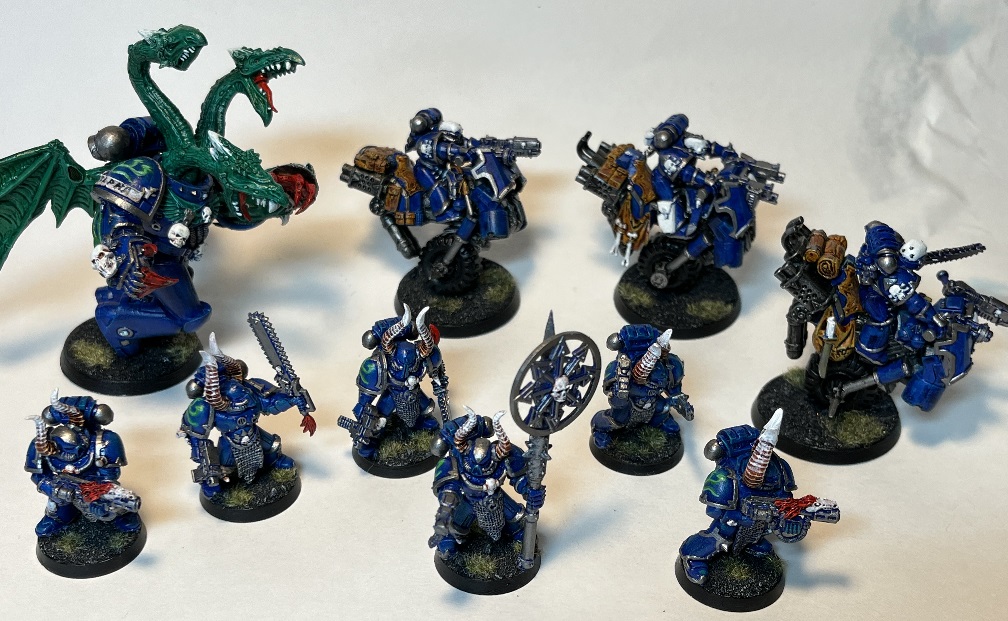
Example: You have designed the ultimate Biel-Tan Dark Reaper army. It features 20 Dark Reapers, and has slaughtered pretty much every Space Marine army in your local gaming group time and again. Your friends aren’t really all that enthusiastic about playing games in which their entire army is wiped out before it can do much of anything to yours. Maybe it’s time to start working on another army list?

Up next: Master Wargamer Paul Hill discusses general strategy.

“SAGE” IS COMING! If you love fantasy roleplaying games but hate the clunky rules of old editions, or the bloat and lameness of new editions, you’re going to love SAGE!
SAGE stands for “Simple & Awesome Gaming Engine,” and it’s a fun and easy way to adventure, meant for busy people (new players and veterans) who don’t have the time or inclination to power through 500+ pages of rules spread across multiple books.
SAGE is the game I’ve been wanting to build for the past 30 years, and soon I can share it with you. I have not used any AI when writing or editing SAGE, or for any of its artwork, because AI sucks, and you deserve better.
SAGE is a labor of love designed by gamers for gamers; it’s not a cash grab by a big corporation that only cares about churning out product. Everything the players need will be in one slim, softcover volume. A separate book (about the same size) for the game master will cover monsters, treasure, and magical items. That’s it. Nothing else needed. All reasonably priced, with minimal frills. And, of course, there will be digital versions you can pull up on your phone.
Look for the Players Rulebook early this year, and the Game Master’s Guide in late 2026 or early 2027. You can read more about SAGE here and here and here. Visit www.sagefantasyrpg.com.
Kenton Kilgore writes books for kids, young adults, and adults who are still young. Follow Kenton on Facebook for frequent posts on sci-fi, fantasy, and other speculative fiction. You can also catch him on Instagram.