THIS VINTAGE JUNGLE SERIES first appeared in 2002; because it was popular with visitors, I am sharing it again now. The series was written for the 3rd Edition of Warhammer 40,000, but I have made some revisions to the original posts to account for changes to the game, and to broaden its scope to wargames in general.
Previous entries in this series:
- Army Selection, Part 1 by Stan Reed
- Army Selection, Part 2 by Ken Lacy
Editor’s note: Real-life soldier Paul Hill says:
I’ve been familiar with GW products since my mother bought me a copy of Rogue Trader for Christmas in 1989. I started playing 40K in mid ’99. I had always avoided 2nd Edition and still own a copy of Rogue Trader. I play for the game, not the winning. Wining is easy; entertainment, now that’s tough.
For armies, my pride and joy are my Marines, “The Emperor’s Finest,” which I now have just about 10,000 points worth! I also have about 3500 points of Eldar (either Biel Tan or Iyanden). I also have a still hodge-podge collection of Cadian Guardsmen that form elements of the 28th Cadian Regimental Combat Team. I am working on a story idea for a Dark Eldar Kabal—of which I have about 2500 points in models. And my funniest army is my Hentai Cult. I have about 2500 points of a Slaaneshi cult army with ZERO Noise Marines (I hate the models). It does however have 72 School Girls and a Dreadnought that screams, “Spank me, Daddy!’“
For winning percentage, my most reliable army is my Biel Tan Eldar. The Craftworld Rhaintha’s Swordwind fields a little bit of everything (at 2k, there are 10-member squads of each Aspect except Warp Spiders and Shining Spears). Without the normal concentration on one or even two Aspects, the army really becomes one of finesse. It still wins overwhelming victories!
My least successful army is my IG, partly because of a lack of practice, but mainly because I feel that in 40K, the concept of Maneuver and Offensive are King. Overall, I win more often than not.
For tournament experience, I have done three Rogue Traders. I did abysmally poor in my first. Between having a ‘cheesy’ army and not understanding the intent (to have fun), I took one of the bottom ten spots of 60. But you live and learn. My next showing was 7th of 40 (including Best Story), and then 3rd of 20 (again, including best story). My tournament experiences have been very positive experiences.
General Strategy
by Paul Hill
METT-T is a term that should be familiar to soldiers. It means Mission, Enemy, Terrain, Troops and Time available. Focusing on your goals (and here we are talking strictly about playing better) is required to be a more skilled player. METT-T will give a practical framework in which to play a skilled game and improve your winning percentage.
Mission. What is it you need to do to win? Be sure you understand the victory conditions for both sides. Most missions are very straightforward. Holding board quarters is most typical. Even so, read and be sure of exactly what can hold territory: I once was forced to a draw because I forgot a gun-less Land Speeder can hold territory!
Some missions inflict a distinct disadvantage on you, such as any mission where you are in reserve and the enemy is not. It is especially important to know the requirement for victory. For example, if the victory conditions are only that you be closest to the objective when the games ends, it does not matter if the other guy has control all the way through his last turn if you end up on the objective at the end.
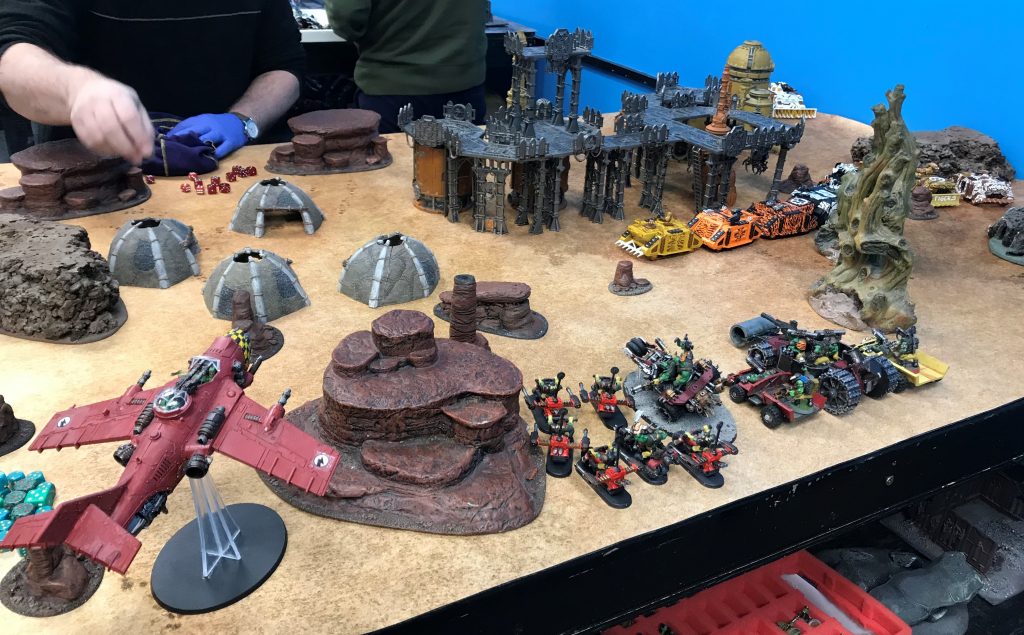
One of my favorite types of missions is where both players are hampered by reserves. In this situation, it is best to deploy your slowest units first: anything that can move faster can make up time naturally.
Enemy. What kind of force is your enemy likely to field? Is it a fast-but-fragile army like the Drukhari? Is it a foot-slogging horde like ‘Nids? Or, is it a shooting nightmare in the form of an Astra Militarum SAFH (Shooty Army from Hell). Knowing what you will be facing–even if in a tournament, where you can’t change your list–you should start to form a plan.
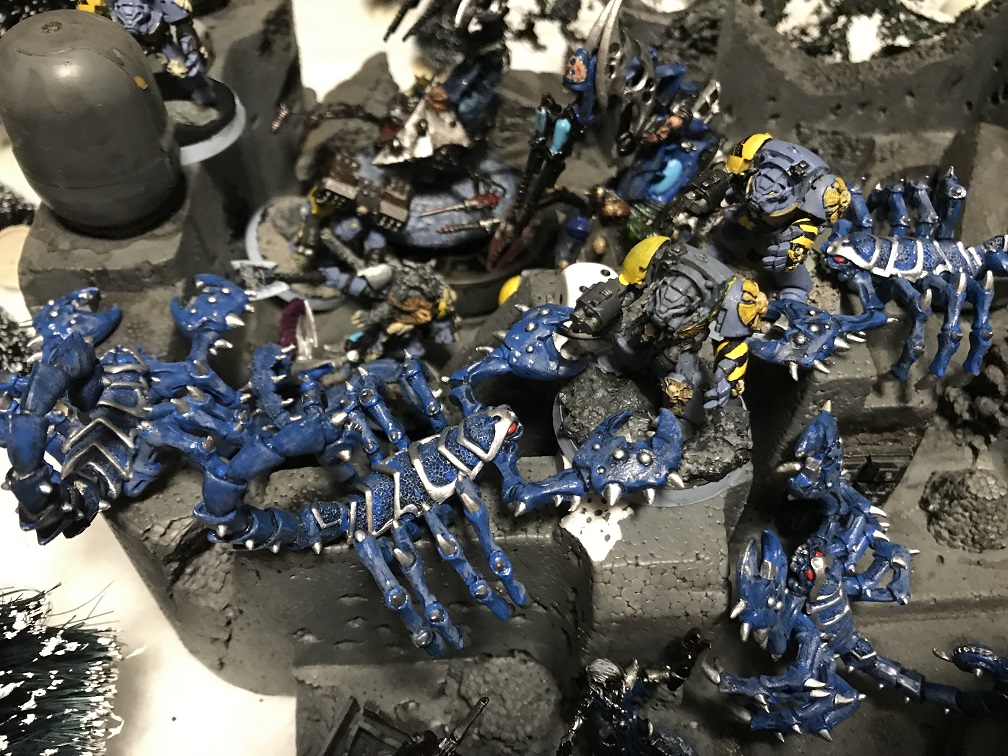
In most general terms, you need to think “Out-Shoot the Assaulters, and Out-Assault the Shooters.” Imagine you are facing the dead-hard Space Wolves. Should you just run willy-nilly towards them? No, but why not? Because if you have (for example) a basic Space Marine force, he will probably own your butt up close.
So what do you do? Shoot him. Shoot him a lot. The idea works both ways. Assaulting armies should never get into a firefight with shooting armies: a definite no-win situation!
While you’re thinking about the enemy, bear in mind the following Target Priority List. Plan on killing enemy units in the following order:
- Speed. First, kill the faster targets (examples: Land Speeders, Raiders, Trukks, Hormagaunts)
- Soft. Then kill easy-to-wound/break/destroy units (examples: squads under 10 men, bikes, Rhinos)
- Specialists. Then kill the close-combat/shooting units that can cause you lots of grief (examples: Terminators, Burna Boyz, Dreadnoughts, Wraithlords, Dark Reapers)
If you have a situation where two things are equally fast, then you kill the softer target first. If the targets are equally soft, you kill the more specialized unit first. Remember, however, that any unit can threaten you (fast ones just do it from far away!).
During each turn of the battle, assess the situation and assign targets accordingly: a slow unit that has been unhurt and allowed to advance too close should become your top priority even if it doesn’t fit any of the categories given above.
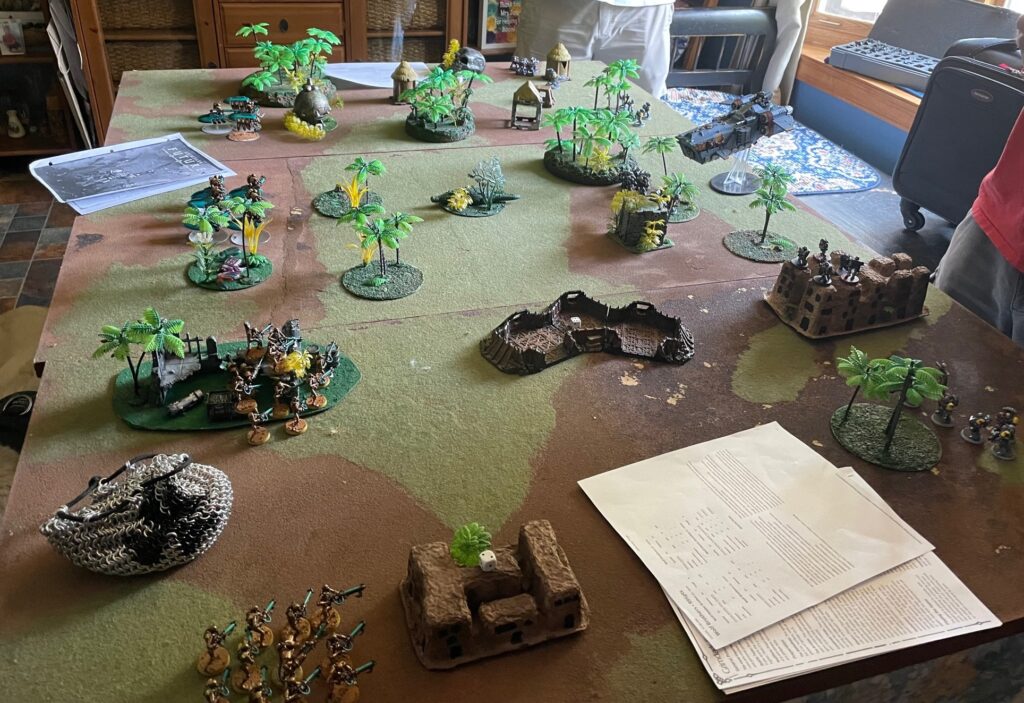
Terrain. Understanding what terrain can do for you and do to you is also very important. Fire lanes win games for shooting forces; cover kills the same shooting force. Deployment is possibly the biggest part of terrain.
For assaulting armies, knowing where the covered approaches are is necessary. In general, the fastest-covered approach is what every assault force wants. Speed is important, but so is surviving the enemy’s firepower.
In defense, low walls are great, as they give cover saves. A feel for spaces between terrain is as important as the terrain itself. It is also worth noting that some (few) groups play where forest bases are WYSIWYG (What You See is What You Get), meaning that there is no abstraction of the base of terrain blocks line of sight. If you do not know your opponent, be sure to clarify this before hand.
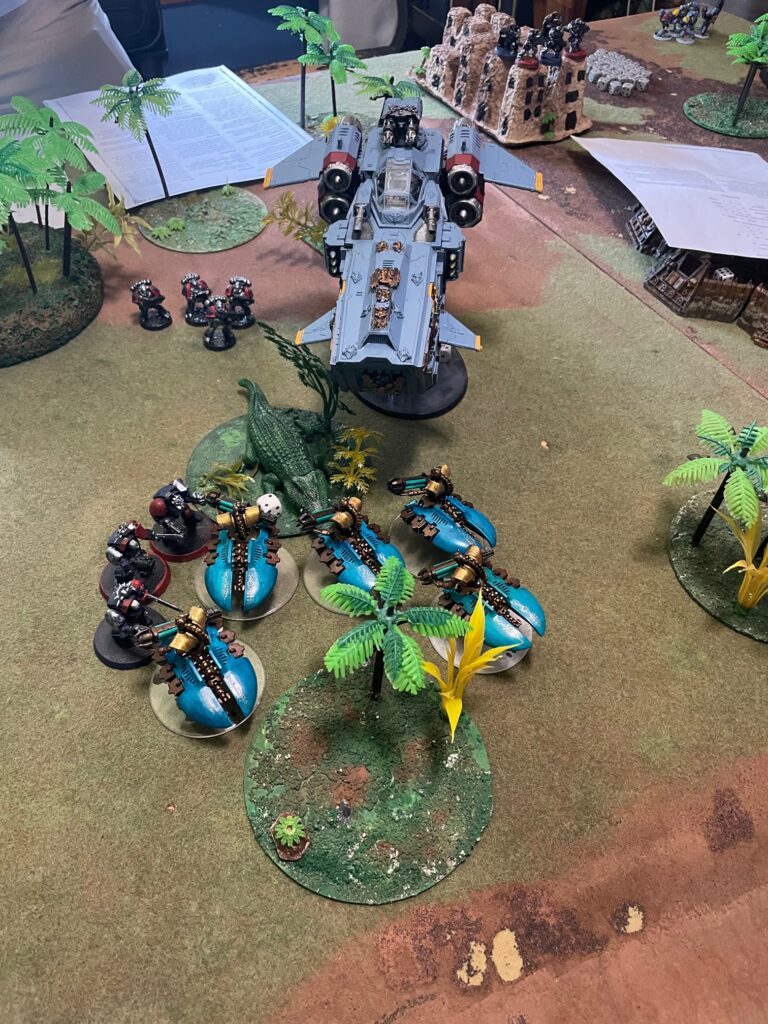
Troops. This means “What forces do I have available?” The famous Chinese general Sun Tzu said that knowing your army will allow you to win half the time, knowing your enemy will allow you to win half the time, but knowing both will allow you to win all the time.
Enemy leaders can usually be depended on to pack some serious up-close and personal punch. Elite units may be good up-close or excellent shooters. Fast Attack units can force an enemy reaction, or just be used to reinforce a sagging line. Heavy Support units usually means shooting.
Troops choices are the bread and butter of every army. Sure, it is nice to have Terminators and Carnifexes, but it is the Tactical Squads and Hormagaunts that will allow you to win. Think of the big men (the Dreads, the Wraithlords, the Leman Russ) as the tools that get the door open for your Troops choices to win games. Note, however, that sometimes it works the other way, as in the case of ‘Gaunts. Their job is to tie up the enemy long enough to allow the Tyrant and friends to reach close combat.
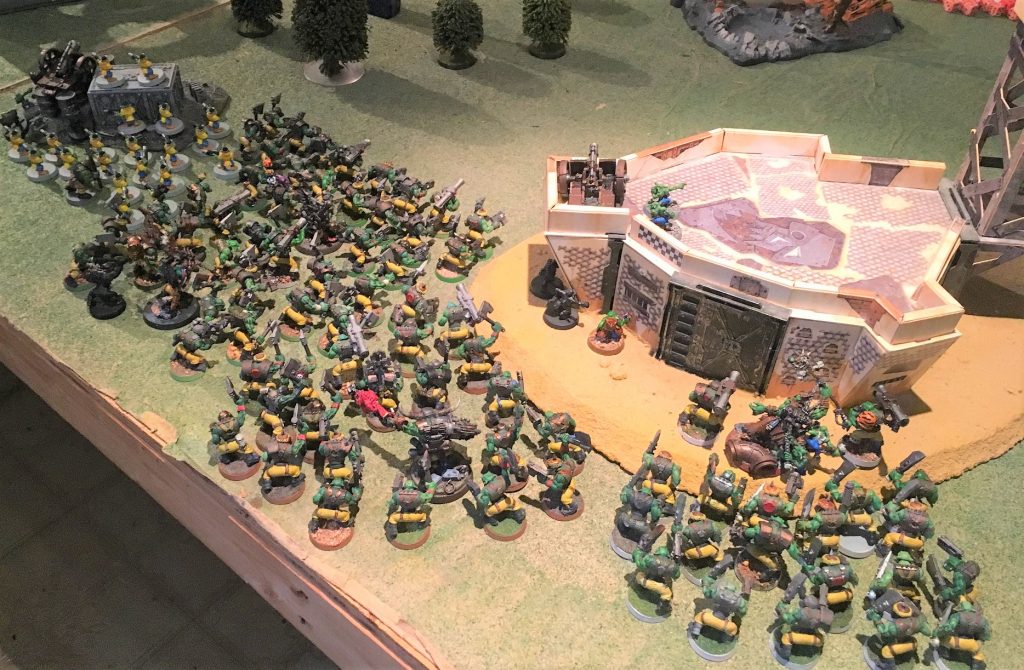
Most Troops choices will be flexible; it is the individual player to make the unit fit a role. An Eldar Guardian squad that is only 5 members and a Star Cannon is weak up close, but packs a serious punch at range. Dark Eldar Raider Squads can be equipped for close combat work (by tooling up the Sybarite), or they can be mobile fire support by equipping them with a Dark Lance.
Understanding the army you bring to the table means knowing how it all works together. Fire supports maneuver and maneuver supports fire. On the other hand, maybe your cannon fodder prevents the enemy guns from killing the powerful units.
Sometimes you will know beforehand what your mission is and who your opponent will be. Take this opportunity to streamline your list. Again, think about what you will need to be successful. Are you going to be on the defensive? If so, think about what kinds of units hold ground the best. Are you going to be facing Orks? Lose the melta guns in favor of flamers. Try to keep in mind what the enemy is likely to field, and what you will need to counter it. The flip side is to understand what the enemy has to counter your troops with.
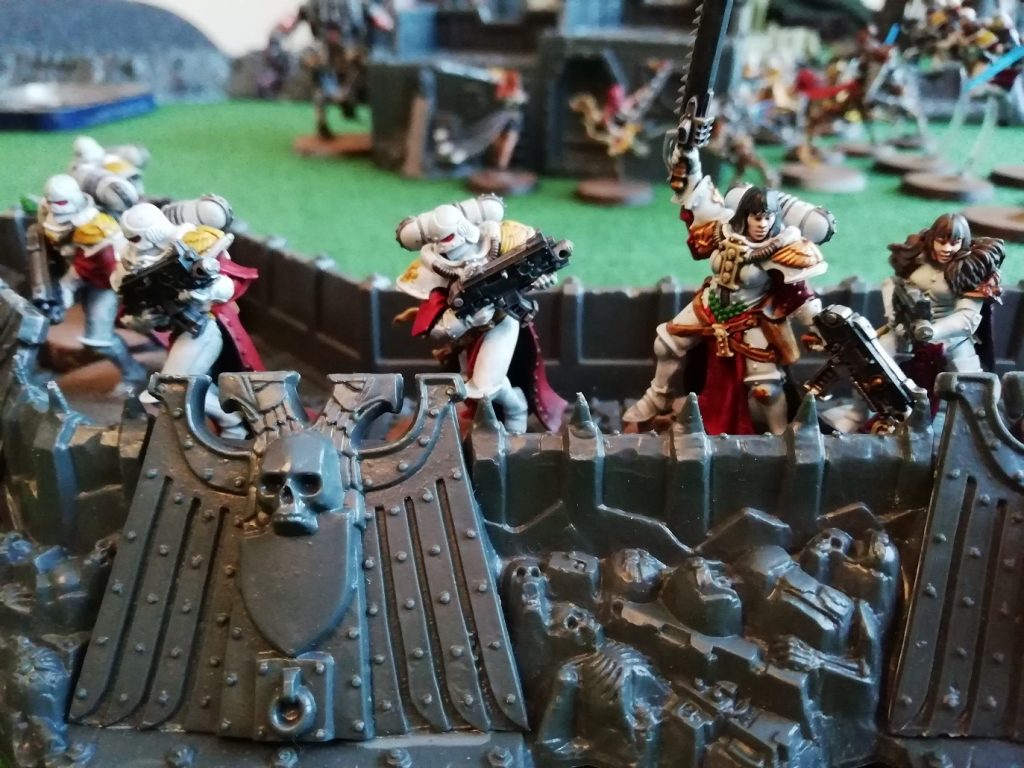
Time Available. The easiest of all the points. How long will the game last? Will the game be four turns, or six turns? Will the game end in one hour, or two? You must be aware of how long you have to defeat your enemy. You may need to know when to jump to squeak the win out from under your enemy.
While this element may seem obvious, it still bears mentioning. How many times have you lost because you lost track of time? However, I am not saying that you should stall in a game limited by real time–that is just bad play. No one wants to waste time with a bad player.
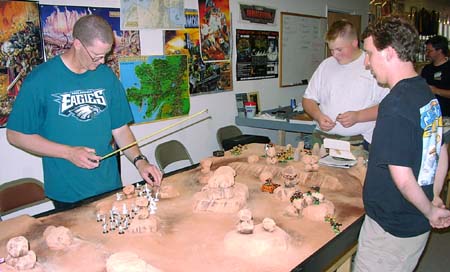
AAR (After Action Review). The AAR is a very important part of learning to play better. If you have a good opponent, sit down after the game and talk about it. Ask questions like “What was supposed to happen? What did happen? How can I do better?” Even after a win you should review. Sometimes you made a mistake that your opponent thought to exploit (or maybe it was a plan on your part!).
Honestly evaluate the performance of each unit in the army. “Did my Broadsides shoot anything? Did they control ground? Did they draw fire?” A very common excuse is “My dice were bad.” I love this excuse–I used to say that like it was my job! Well, do not do that. Next time, look for ways to minimize the effect of dice. How?
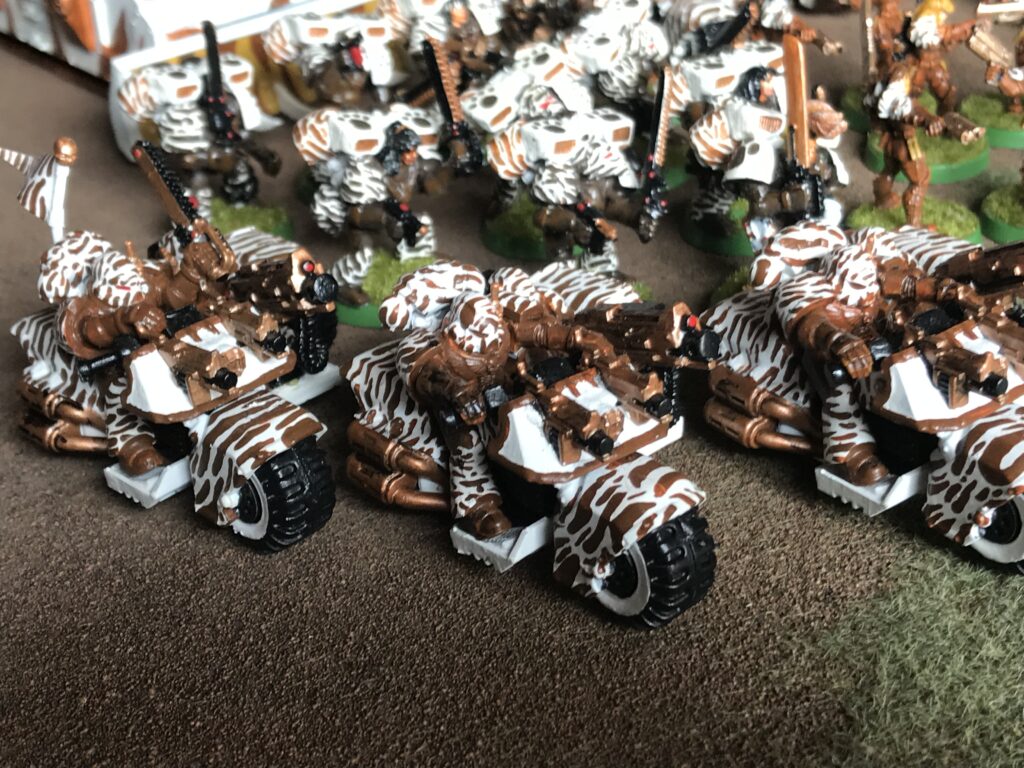
Hit the bad guys with shots that ignore his armor. If you’re facing a Trukk and a Battlewagon, hit that Trukk with your lascannon. If you have models that are poor shooters, use multi-shot weapons whenever possible (Cultists with flamers!). Maneuver to assault an isolated squad with 20 or 30 Marines (and yes, they will kill whatever they jumped on).
In conclusion, try to remember METT-T when getting ready to play. Mission, Enemy, Troops, Terrain, and Time available: these five concepts, when remembered, can be the difference between a win and a loss.
Up next: Master Wargamer Rob Van Pelt discusses deployment.

“SAGE” IS COMING! If you love fantasy roleplaying games but hate the clunky rules of old editions, or the bloat and lameness of new editions, you’re going to love SAGE!
SAGE stands for “Simple & Awesome Gaming Engine,” and it’s a fun and easy way to adventure, meant for busy people (new players and veterans) who don’t have the time or inclination to power through 500+ pages of rules spread across multiple books.
SAGE is the game I’ve been wanting to build for the past 30 years, and soon I can share it with you. I have not used any AI when writing or editing SAGE, or for any of its artwork, because AI sucks, and you deserve better.
SAGE is a labor of love designed by gamers for gamers; it’s not a cash grab by a big corporation that only cares about churning out product. Everything the players need will be in one slim, softcover volume. A separate book (about the same size) for the game master will cover monsters, treasure, and magical items. That’s it. Nothing else needed. All reasonably priced, with minimal frills. And, of course, there will be digital versions you can pull up on your phone.
Look for the Players Rulebook early this year, and the Game Master’s Guide in late 2026 or early 2027. You can read more about SAGE here and here and here. Visit www.sagefantasyrpg.com.
Kenton Kilgore writes books for kids, young adults, and adults who are still young. Follow Kenton on Facebook for frequent posts on sci-fi, fantasy, and other speculative fiction. You can also catch him on Instagram.